
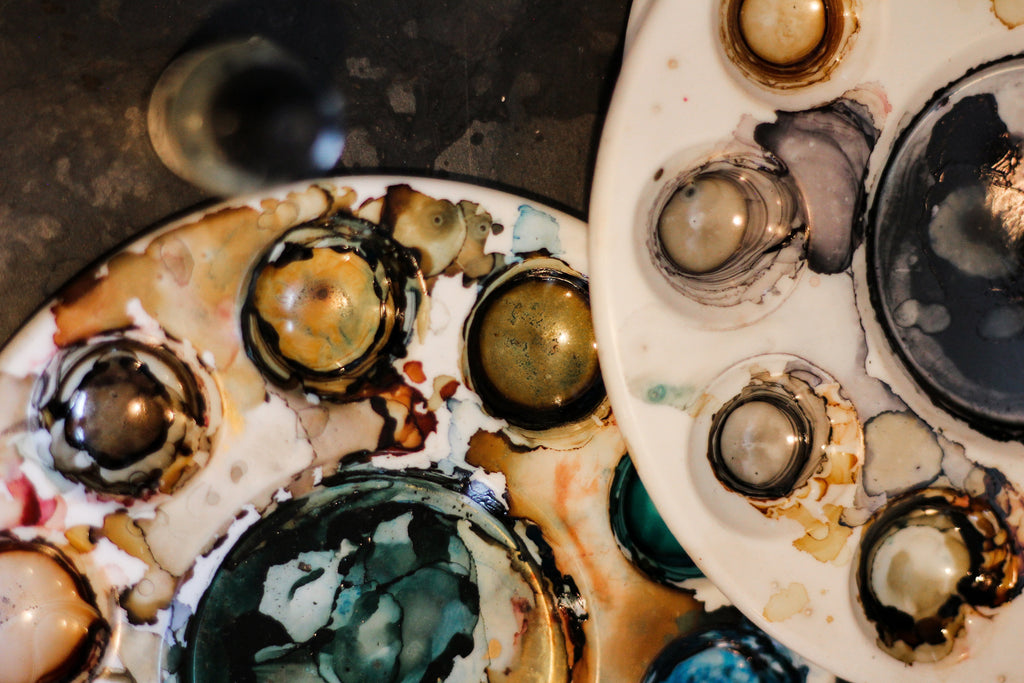
How I paint with Alcohol Ink
How I Paint With Alcohol Ink (My Process + Why I Love This Medium)
If you’ve ever watched alcohol ink in motion, you know it’s one of those art mediums that’s hard to explain until you see it. It’s vibrant, fast-moving, and a little unpredictable — and that’s exactly why I love it.
Alcohol ink is a highly pigmented, dye-based ink that dries quickly and creates beautiful, organic movement. I use it to create abstract landscape-inspired artwork that feels peaceful, hopeful, and full of depth.
In this post, I’m sharing my personal alcohol ink painting process, from start to finish.
What is alcohol ink?
Alcohol ink is an alcohol-based dye ink known for its bold pigment and fluid blending. It moves easily when combined with alcohol and dries quickly, which means the process is very hands-on and intuitive.
It’s especially popular for creating:
-
abstract alcohol ink art
-
flowing landscapes
-
soft blends and layers
-
vibrant color movement on non-porous surfaces
Step 1: I start with a blank surface + intention
Before I paint, I choose a direction — usually based on a mood, color palette, or feeling. I don’t sketch everything out, because alcohol ink has its own personality and I like to leave room for the piece to evolve.
I paint on Yupo paper, panels, tiles, and prepared canvas, depending on the look I’m going for.
Step 2: I apply the ink + 99% rubbing alcohol
Next, I begin building the foundation using alcohol ink and 99% rubbing alcohol. I’ll add drops, pools, and marks of color, then use alcohol to help it spread, blend, and bloom.
This is where the artwork starts to come alive — the ink moves quickly and creates natural, unexpected texture.
Step 3: I use air tools to guide the movement (my signature)
This is the part that really defines my style.
Instead of relying heavily on tilting the surface, I use an airbrush and other air tools to shape the ink. I describe it as sculpting the flow — guiding the movement, softening edges, and creating layered transitions.
It’s equal parts intention and surrender, and it’s my favorite part of the process.
Step 4: Layering (where the depth is built)
Alcohol ink dries fast, so layering is essential. I work in rounds:
-
dry
-
return
-
soften
-
deepen
Layer by layer, the painting gains contrast, texture, and depth. This is where the piece shifts from “pretty” to meaningful.
Step 5: Final details + sealing
I know a piece is finished when adding more would take away from it.
To protect the work, I seal it with varnish or resin, depending on the project and the final look I want. This helps preserve the artwork so it can last long-term in someone’s home.
Why I love painting with alcohol ink
Alcohol ink has taught me a lot — not just as an artist, but as a person.
It’s a medium that requires trust. You can guide it, but you can’t force it. And there’s something powerful about creating beauty while allowing movement and unpredictability.
That’s one of the reasons my artwork is inspired by nature, stillness, resilience, and the “inner landscape” we all carry — especially in hard seasons.
My hope is that every piece brings a sense of peace and hope, and becomes a reminder that becoming doesn’t have to be rushed.
